
Meeting Preparation Agent
Walks into every meeting knowing what happened in the last one.
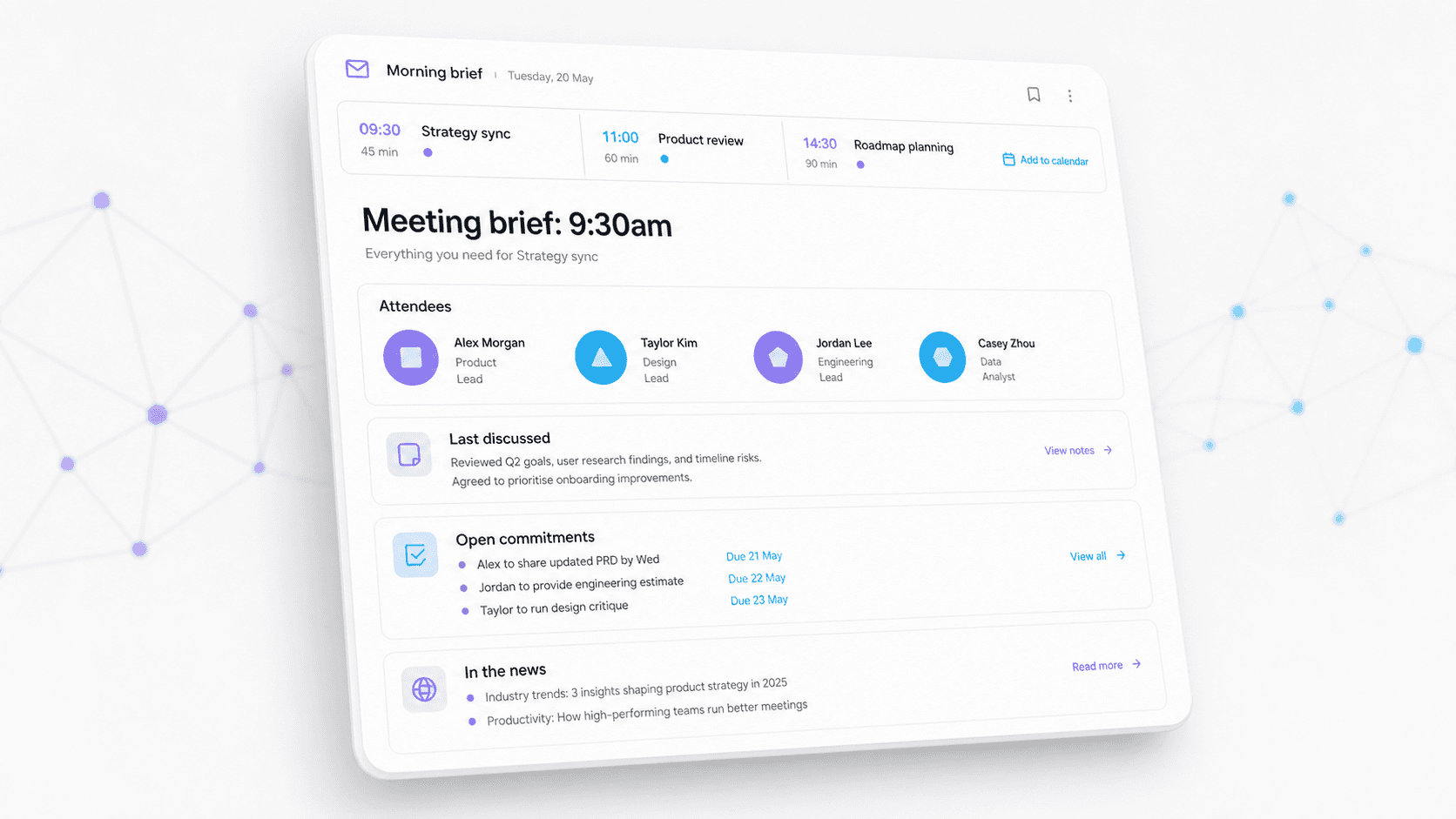
A Meeting Preparation Agent reads the next two days of your calendar, matches every attendee against your CRM, and gathers what your teams have said internally alongside what the market has said publicly — then emails a structured briefing before the day starts. It runs daily, without being asked.
The job to be done
“I walk into client meetings without knowing what we last promised them, what has changed since, or what they announced this week.”
Before
Half an hour of hunting through email, the CRM and the trade press before each meeting — or, more honestly, going in cold.
After
A twelve-section brief in your inbox each morning, covering every meeting in the next 48 hours.
How it works
- 1
Reads the calendar
Scans the next 48 hours of meetings and identifies who is in the room.
- 2
Matches the CRM
Links each attendee to their account, open opportunities and recent activity.
- 3
Gathers internal context
Pulls 90 days of relevant internal conversation — what was promised, what was escalated, what is outstanding.
- 4
Adds market intelligence
Scans the trade press for anything the client has announced or been written about.
- 5
Writes the brief
Emails a structured twelve-section briefing before the working day starts.
Where this one was built
Built and running daily in the advertising sales team of one of Australia's largest media organisations.
Questions
What does a Meeting Preparation Agent actually do?
It reads the next 48 hours of your calendar, identifies who will be in each meeting, matches them to your CRM, gathers the relevant internal history and any recent public news about them, and emails you a structured briefing before the working day starts. It runs on a schedule — nobody has to ask it.
How much time does a meeting preparation agent save?
It reclaims the preparation time before each client meeting — typically around half an hour that would otherwise be spent searching email, the CRM and the trade press. Across a sales team with several client meetings a day, that compounds quickly.
What systems does it need access to?
At minimum a calendar and a CRM. It gets substantially better with access to internal communications and a source of industry news, because that is where the context lives that a rep would otherwise miss.
Is this different from a meeting-notes tool?
Yes, and in the opposite direction. Note-taking tools capture what happened after the meeting. This prepares you before it — the useful half, and the half nobody has time for.
Want this one running in your business?
We will scope it against your systems, build it, and teach your team to build the next one themselves.
.png&w=96&q=75&dpl=dpl_C4hMsrFjgZaVnuhJpbBN2ZsRJRXU)